Tuesday, April 27, 2010

Update

Salam guys =)

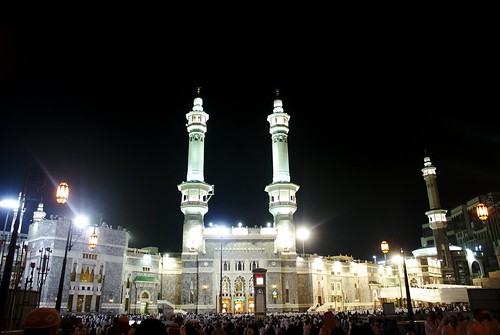
I've been blessed with another last minute trip to Mecca, this time for Omra ofcourse. All I can say is that it was so lovely that I actually kinda felt depressed at having to leave xD InshaAllah I'll be blessed with another visit to Mecca soon.

The Haram was not as crowded as during Hajj time, that's a whole other scene on itself and cannot be described till you are actually there yourself (may Allah bless you all with Hajj soon) but it was still was pretty packed, more so than I expected at this time of year mashaAllah. I noticed that the greatest number of a particular country of people there were Turks. During Hajj and even until now I keep seeing a great number of Turkish people, mashaAllah. My mother told me that there's a kind of Islamic revolution going there, where people are coming back to the roots of the religion. Old and young Turks were there, and little adorable kids as well <3 We got to know a couple of people throughout our time in the Mosque, since you get to sit next to a different person at nearly every prayer. This is another thing I loved about the experience, having to meet people from all walks of life.

One thing that I did enjoy as well, and not related to the Haram, was this store we went into called Mecca Dates. They sell dates if you haven't figured it out yet =P I was on Cloud 9 in that store as the seller kept giving us samples and samples and samples of different dates, and I kept gourging on them .... I.LOVE.DATES! So I bought me two boxes of my favourite samples (one of them was called Anbar, I don't remember the name of the other one), and I finished them in like 3 days xD

Here's a photo, taken on the second day of us being there


Sunday, April 11, 2010

[Aya] Anger

وَلَمَّا سَكَتَ عَن مُّوسَى ٱلۡغَضَبُ

"When the anger of Moses was appeased"

Verse 154, Surat Al A'araf


The English translation I shared here is really not satisfactory to the words that are in Arabic. Appeased somehow does not seem like the right word to be used here, because anger is described as something that can talk, then can be made quiet. The word used in Arabic in place of appeased is (سَكَتَ) which means to become quiet. Like a noisy room that suddenly becomes quiet when someone walks in for example. Though Appease does include the meaning of to make something quiet, it also includes the meaning to calm something down.

The anger that is described in the verse seems like something that talks to you, or more like shouts and screams at you, causing of noise in your head and within you. You need to take control of it and shut it up basically lol, make it quiet.

Does anger feel that way to you? It sure does with me.

Allah knows best.

More to come on topic in later post.

Saturday, April 10, 2010

Lectures in Muscat

Lectures this week in Muscat (sorry for not providing the title of the lectures as I am not aware of them yet):
  • Skeikh Mohammed Al Areefi in SQU's open theatre on Sunday the 11th April at 7 pm
  • Skeikh Hamza Yusuf in Qurm Park's theater on Wednesday the 14th, Thursday the 15th and Friday the 16th April at 8.15 pm
Update:

For more info follow this link http://www.islamfact.com/islamfact_news/3061.html

Saturday, April 3, 2010

Surat Al Kahaf questions

My dear readers, I am in a bit of a pickle and I would appreciate some insight from you guys on some verses from Surat Al Kahaf.

The story of Prophet Moosa and Khithr (Peace be upon them) is one of the many that is told to us by Allah in Surat Al Kahaf (and one of my favorites) . Khithr is basically an embodiment of Qadar (destiny ordained to us by Allah Subhanho wa Taala) and it just goes to show that no matter how much you think you know ... you just don't.

The verses that caught my attention (as was first pointed out to me by my Mother) are the following:

قَالَ هَـٰذَا فِرَاقُ بَيۡنِى وَبَيۡنِكَ‌ۚ سَأُنَبِّئُكَ بِتَأۡوِيلِ مَا لَمۡ تَسۡتَطِع عَّلَيۡهِ صَبۡرًا

He answered: "This is the parting between me and thee: now will I tell thee the interpretation of (those things) over which thou wast unable to hold patience.

أَمَّا ٱلسَّفِينَةُ فَكَانَتۡ لِمَسَـٰكِينَ يَعۡمَلُونَ فِى ٱلۡبَحۡرِ فَأَرَدتُّ أَنۡ أَعِيبَہَا وَكَانَ وَرَآءَهُم مَّلِكٌ۬ يَأۡخُذُ كُلَّ سَفِينَةٍ غَصۡبً۬ا

"As for the boat, it belonged to certain men in dire want: they plied on the water: I but wished to render it unserviceable, for there was after them a certain king who seized on every boat by force.

وَأَمَّا ٱلۡغُلَـٰمُ فَكَانَ أَبَوَاهُ مُؤۡمِنَيۡنِ فَخَشِينَآ أَن يُرۡهِقَهُمَا طُغۡيَـٰنً۬ا وَڪُفۡرً۬ا

"As for the youth, his parents were people of Faith, and we feared that he would grieve them by obstinate rebellion and ingratitude (to Allah and man).

فَأَرَدۡنَآ أَن يُبۡدِلَهُمَا رَبُّہُمَا خَيۡرً۬ا مِّنۡهُ زَكَوٰةً۬ وَأَقۡرَبَ رُحۡمً۬ا


"So we desired that their Lord would give them in exchange (a son) better in purity (of conduct) and closer in affection.

وَأَمَّا ٱلۡجِدَارُ فَكَانَ لِغُلَـٰمَيۡنِ يَتِيمَيۡنِ فِى ٱلۡمَدِينَةِ وَكَانَ تَحۡتَهُ ۥ كَنزٌ۬ لَّهُمَا وَكَانَ أَبُوهُمَا صَـٰلِحً۬ا فَأَرَادَ رَبُّكَ أَن يَبۡلُغَآ أَشُدَّهُمَا وَيَسۡتَخۡرِجَا كَنزَهُمَا رَحۡمَةً۬ مِّن رَّبِّكَ‌ۚ وَمَا فَعَلۡتُهُ ۥ عَنۡ أَمۡرِى‌ۚ ذَٲلِكَ تَأۡوِيلُ مَا لَمۡ تَسۡطِع عَّلَيۡهِ صَبۡرً۬ا


"As for the wall, it belonged to two youths, orphans, in the Town; there was, beneath it, a buried treasure, to which they were entitled: their father had been a righteous man: So thy Lord desired that they should attain their age of full strength and get out their treasure - a mercy (and favor) from thy Lord. I did it not of my own accord. Such is the interpretation of (those things) over which thou wast unable to hold patience."

Verses 78 to 82, Surat Al Kahaf

As Khithr begins to explain to Prophet Moosa (Peace be upon them) the reason for his actions, there is a change in who is being referred to as doing the action (I totally don't remember what this is called in English grammar).

With the boat, Khithr says (seemingly referring only to himself):

فَأَرَدتُّ أَنۡ أَعِيبَہَا
I but wished to render it unserviceable

With the youth, Khithr says (seemingly referring to several):

فَخَشِينَآ
we feared

فَأَرَدۡنَآ أَن يُبۡدِلَهُمَا رَبُّہُمَا
So we desired that their Lord would give them in exchange


With the wall, Khithr says (seemingly referring to Allah only):

فَأَرَادَ رَبُّكَ
So thy Lord desired

I had a little think about it and came up with my own reasoning (Allah knows best) that the reason why:

  • Khithr referred to himself only with the boat incident is that he created the fault in it with his own hands.
  • Khithr referred to a group with the youth is that he killed the youth but then Allah Subhanho wa Taala will bless the boy's parents by creating for them another child (so I assume here that "we" refers to Khithr and Allah).
  • Khithr referred to Allah only with the wall incident because it is Allah who will keep the treasure safe as well as the two youths until they are able to find it.
However, I am not a student of Tafseer, and so this reasoning is just an opinion that should not be taken as the correct answer. I would love to learn more about as well as understand why the verses keep changing with regards to subject matter (hope that is the right way to say it) . I did try to have a search on the world wide web, but that didn't yield the desirable results.

If any reader has an idea on the matter, read something on the subject or has asked someone of knowledge about it, please please don't hesitate to tell me about it, whether in the comments or by flicking me an email =)

Jazakoum Allah Khairan!


Monday, March 29, 2010

Blessings again ...

I shared in the blog a post about a week ago about Yusuf Estes coming to Muscat. I attended two of his lectures here and both were wonderful =) I was so so so excited to see him right in front of me rather than on Youtube like I usually do. He used the same jokes as always but I still ended up laughing anyway LOL xD

During the first lecture, a man reverted to Islam. I believe he was British judging from the accent. I can't tell you how emotional that was for me. I never cry in public, but on that day I found the tears streaming down my face. I kept thinking how fortunate I am to be here, to witness a man who's sins are about to be replaced with mountains of Hasanat. I also felt happiness from the great blessing Allah has bestowed upon this man to give him Hedaya and guide him to Islam. I hear sniffling and turn my head around to find most if not all the women in the row I was sitting in (including my Mama) with tears in their eyes also. Yusuf explained to the man the words of shahada that he is about to say in English, then guided him through the Arabic words. It was wonderful =)

I did not attend the third lecture unfortunaltly, but my cousins did and they told me that four people on the day reverted to Islam, mashaAllah. One before the lecture and three right after it. I was super disappointed that I did not make it =( Al Hamdullah in the end of it all.

Blessings take different forms in our life. There are the super obvious ones, like the people that have reverted back to Islam with the guidance of Allah Subhanho wa Taala. Then there are the less obvious ones, the tiny ones if you may. The day before yesterday, I went for my usual walk in the park with my Mother. At the end of it, I was thirsty and hot and I craved for oranges. As soon as I got my hands on a piece of orange, I bit into it and its sweet juice exploded in my mouth and cooled me off as well as quenched my thirst. I realized how incredible this simple little fruit is, how blessed we are that Allah gave it to us. You must remember that as Muslims, we have to bear in mind that NONE of what we have in this world is ours. Even our own limbs are not ours, but all blessings from Allah. He gave us arms and hands, and did not give others. He gave eyes to see with, and did not give others. He gave us a family and a home, and did not give to others. He blessed us with the ability to eat whenever we want to, rather than starve like many people in the world. It just goes on and on.


وَإِن تَعُدُّواْ نِعۡمَتَ ٱللَّهِ لَا تُحۡصُوهَآ‌ۗ
إِنَّ ٱلۡإِنسَـٰنَ لَظَلُومٌ۬ ڪَفَّارٌ۬

"If you count Allah's blessings, you can never encompass them all.

Indeed, the human being is transgressing, unappreciative."

(Surat Ibrahim, verse 34)

Try to think about the blessings in your life, the tiny ones and the big ones. Take a few minutes out of your busy time in the day and think about it. Thank Allah for it all, for bear in mind that the most blessed in this world will be asked the most of what they did with their blessings and if they appreciated and thanked Allah for it. Another thing that is also good to mention is that many people these days seem to think that they are loved by Allah because of their wealth and health and good life ... and therefore better than the people whom are not as blessed. Do not for a second even believe that.

ثُمَّ لَتُسۡـَٔلُنَّ يَوۡمَٮِٕذٍ عَنِ ٱلنَّعِيمِ

"Then, shall ye be questioned that Day about the joy (ye indulged in!)."

(Surat Al Takathur, verse 8)

Wednesday, March 24, 2010

[Aya] Blessings


وَإِن تَعُدُّواْ نِعۡمَتَ ٱللَّهِ لَا تُحۡصُوهَآ‌ۗ
إِنَّ ٱلۡإِنسَـٰنَ لَظَلُومٌ۬ ڪَفَّارٌ۬


"If you count Allah's blessings, you can never encompass them all.

Indeed, the human being is transgressing, unappreciative."

(Surat Ibrahim, verse 34)

Tuesday, March 23, 2010

Heaven Lies Under the Feet of the Mother

It was Mother's Day yesterday =) People all over the Arab World celebrated the day by making their mums feel extra special with showers of gift and love. In keeping with the spirit of the occasion, I want to write a post showcasing the great respect Mothers are given in Islam.

It begins with the hadith of the Prophet Mohammad Peace and Blessings be upon him: "Heaven lies under your mother's feet" (Ahmad, Nasai) Imagine now, you're mother standing in front of you and Heaven surrounds her. Allah has bestowed this great rank on her.

A second hadith that showcases the respect Islam gives to mothers is the following:
A man came to the Prophet and said, ‘O Messenger of God! Who among the people is the most worthy of my good companionship? The Prophet said: Your mother. The man said, ‘Then who?' The Prophet said: Then your mother. The man further asked, ‘Then who?' The Prophet said: Then your mother. The man asked again, ‘Then who?' The Prophet said: Then your father. (Bukhari, Muslim).


My little brother and sisters know this song =P


Template by:
Free Blog Templates